
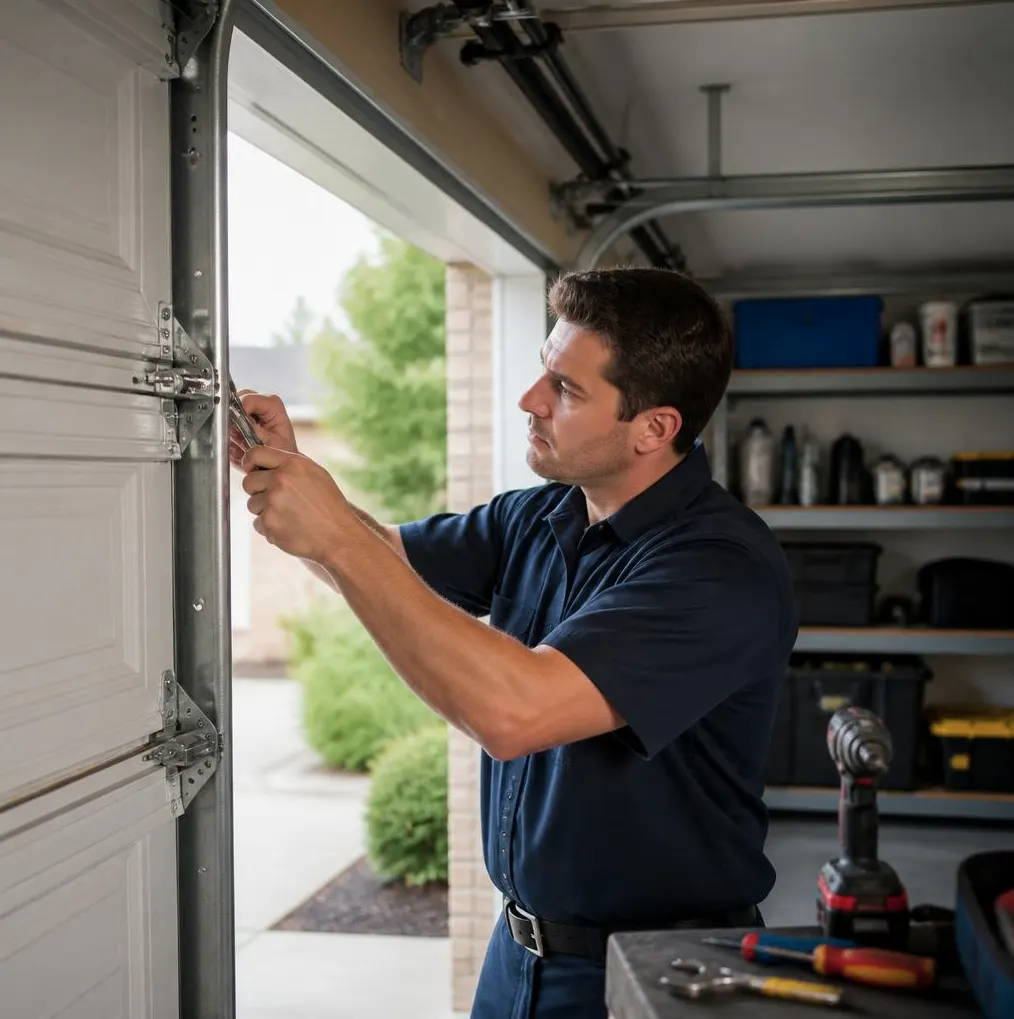
What a technician actually sees on these calls
The call usually comes in the week a storm is forecast, not months before. A homeowner walks into the garage, flips on the light, and notices the door is bowing slightly in the wind gusts from an afternoon squall. Or they go to close it and the track has pulled away from the wall on one side. Sometimes it's simpler than that: rollers caked in rust from months of salt air and humidity, grinding instead of rolling, springs sagging from moisture swelling the wood jamb they're bolted to. By the time most people call, the door has already been flexing under wind pressure for a while and nobody noticed until it got loud or started sticking.
Why the garage door is the weakest wall in the house
Every other wall in a typical home is a continuous, fastened structure. The garage door is a large panel held in a track by rollers, hinges, and a spring system, with nothing but friction and a few bolts keeping it in its opening. When wind hits the front of a house, it doesn't just push — it also creates suction on the back and sides, and if a garage door fails and blows in or out, that pressure has nowhere to go but into the attic and roof structure from the inside. That's why building codes in wind-prone parts of Florida require garage doors to meet wind-load ratings, and why an older or improperly reinforced door is often the first thing to give way in a serious storm, even when the walls and roof hold.
Signs your door won't hold up
- Visible bowing in the panels during regular wind gusts, not just during a hurricane
- Track pulling away from the wall brackets, even slightly
- Rollers that are rusted, cracked, or no longer spinning freely — common near the coast where salt air accelerates corrosion
- Gaps around the edges where weatherstripping has shrunk, cracked, or come loose from heat and UV exposure
- A door with no horizontal struts on the back of the panels, which are what actually resist wind pressure on most residential doors
- An opener with no battery backup, which matters when storm-related outages hit and you need to get a vehicle in or out
The pre-storm checklist
Before the next system is in the forecast, not the day before it arrives, work through this list:
- Check for a wind-load rating. If the door was installed years ago, it may predate current wind-load expectations for this area. A technician can tell you what the door is actually rated to handle versus what it should handle.
- Inspect and tighten track brackets. Fasteners work loose over time from vibration and humidity swelling the surrounding wood or drywall. Loose brackets are one of the most common failure points.
- Add or inspect horizontal struts. These reinforce the panels against wind pressure. Many standard doors don't come with enough of them for storm-prone regions.
- Replace worn rollers and hinges. Salt air near the coast causes rust that weakens metal faster than people expect. Nylon rollers with sealed bearings tend to hold up better than exposed steel in this climate.
- Check weatherstripping and the bottom seal. Beyond keeping out wind-driven rain, a tight seal reduces how much water gets pushed in during the sideways rain that comes with these storms.
- Test the opener's manual release and battery backup. If the power goes out, you need to know the door can still be operated safely by hand or on backup power.
- Consider a brace kit if the door isn't rated for high wind. Temporary bracing systems exist for doors that weren't built to current wind standards, and they're a reasonable stopgap if full replacement isn't in the budget right now.
What the humidity and daily storms do between hurricanes
It's not just the big named storms that cause damage. The regular pattern of hot, humid days and afternoon downpours this time of year keeps garage components in a near-constant cycle of swelling and drying. Wood jambs expand and contract, throwing off the alignment of tracks and sensors. Metal hardware that gets wet and then bakes in the heat corrodes faster than it would in a drier climate. This is why a door that seemed fine in spring can develop bowing, misalignment, or stuck rollers by the time storm season peaks — the damage builds gradually from routine weather, not just from one event.
When to call Port St. Lucie Garage Door Service
If you're seeing any of the warning signs above, or you simply don't know whether your current door meets wind-load expectations for this area, that's the point to call in a technician rather than guess. Port St. Lucie Garage Door Service handles Garage Door Maintenance visits that catch rust, loose hardware, and seal problems before they become storm-day failures, and Garage Door Installation for homeowners whose doors are old enough or weak enough that reinforcement isn't a long-term fix. A technician will inspect the track, springs, panels, and opener, tell you plainly whether bracing or replacement makes more sense for your situation, and get the work done without the upsell.
Storm season doesn't wait for a convenient time, and neither should a garage door inspection. Call Port St. Lucie Garage Door Service today to get your door checked and reinforced before the next system rolls through Port St. Lucie, FL.