
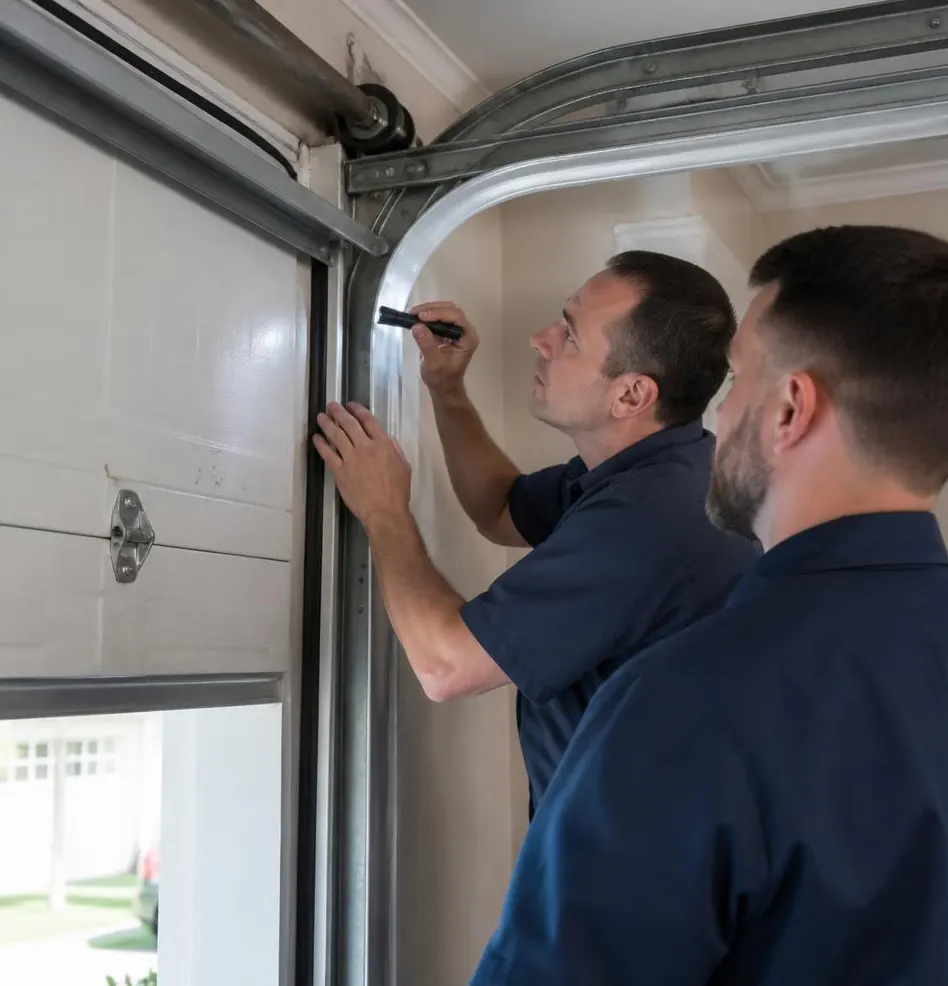
Getting Your Garage Door Ready for Winter, Straight Answer
In Port St. Lucie, winter prep for your garage door means three things: undo the damage hurricane season left behind, adjust for drier air that shrinks seals and stiffens hardware, and double-check safety features before the house fills up with holiday guests and extra traffic in and out of the garage. You're not dealing with freezing pipes or snow load here — you're dealing with the comedown from months of humidity, salt air, and storm stress, followed by cooler, drier weeks where small mechanical problems tend to show up.
Why This Season Is Different
Hurricane season technically runs through the end of November, so your door is still in its storm-ready window even as temperatures start to drop. At the same time, the humidity that's been swelling wood trim and feeding rust all summer finally lets up. That shift — from wet and salty to cooler and dry — is exactly when garage doors tend to reveal problems that were masked by moisture: hardware that seized up from rust, weatherstripping that shrank and now lets in drafts, and springs that were quietly losing tension during months of heavy use to beat the afternoon heat.
1. Inspect Hardware for Rust and Salt Residue
If you're anywhere near the coast — Jensen Beach, Hobe Sound, Vero Beach, or similar areas — salt air has likely been working on your hinges, rollers, and track brackets all summer. Before winter sets in:
- Look for orange rust streaks on hinges, the bottom bracket, and the track itself.
- Check that rollers turn freely; a roller that's seized or grinding is a sign of corrosion inside the bearing.
- Wipe down tracks and hardware with a damp cloth to remove salt film, then dry thoroughly before lubricating.
- Use a silicone-based garage door lubricant on hinges, rollers, and the top of the springs — avoid household oils like WD-40 for long-term lubrication since they attract dust and grit.
Catching rust now, while it's still surface-level, is a lot cheaper than replacing a corroded spring or hinge assembly later.
2. Check Weatherstripping and Seals
Florida's dry season isn't dramatic, but the drop in humidity is enough to shrink rubber weatherstripping that spent all summer swollen and pliable. Walk around the door and check:
- The bottom seal — press on it; if it's cracked, flattened, or pulling away from the track, it won't keep out drafts, dust, or the occasional palmetto bug looking for a way in.
- Side and top seals — look for gaps where daylight shows through.
- Weatherstripping around any side door or service entrance to the garage.
Replacing worn weatherstripping is inexpensive and takes less than an hour, but it matters more than people think — a bad seal lets in moisture during afternoon downpours and lets conditioned air leak out if your garage is attached to living space.
3. Test Spring Balance and Listen for Changes
Months of heavy opener cycling during hurricane prep, plus humidity swings, put real wear on torsion and extension springs. Test balance with the door disconnected from the opener:
- Close the door, then pull the release cord to disconnect the opener.
- Lift the door manually halfway.
- It should stay in place on its own. If it drifts down or shoots up, the springs are out of balance.
Also listen for changes in sound — a grinding, popping, or louder-than-usual operation during the cooler months often means a spring is losing tension or a cable is starting to fray. Springs typically last several thousand cycles depending on usage, and a door that's been opened and closed constantly during storm season may be further along that lifespan than you'd expect.
4. Check the Opener, Sensors, and Battery Backup
With holiday guests, deliveries, and more foot traffic through the garage, now's the time to confirm the opener is working the way it should:
- Test the safety reversal sensors by placing an object in the door's path — it should stop and reverse immediately.
- Check that the photo-eye sensors near the floor are aligned and free of dust or cobwebs, which build up fast in humid months.
- If your opener has battery backup, test it now. Storms can still roll through into late November, and a dead backup battery means a stuck door during a power outage.
- Replace the remote or keypad batteries if response has gotten sluggish.
5. Tighten Hardware Loosened by Summer Vibration
Heat and humidity cause materials to expand and contract, which gradually loosens bolts on the track, hinges, and opener rail. A quick pass with a wrench on all visible hardware — especially the track brackets bolted into the garage structure — prevents rattling, misalignment, and uneven wear once temperatures cool and things contract again.
When to Call Port St. Lucie Garage Door Service
If you find rust that's eaten into the metal rather than sitting on the surface, a door that won't hold its position when lifted manually, or sensors that don't respond consistently, it's time to call in a professional rather than keep adjusting things yourself. Our Garage Door Maintenance service covers a full inspection of hardware, lubrication, and balance testing, and if a spring has lost too much tension, our Spring Replacement service gets it swapped out safely — springs under tension aren't a DIY repair. We also handle opener repairs if your safety sensors or battery backup aren't functioning the way they should.
If your garage door is showing its age after another Treasure Coast storm season, give Port St. Lucie Garage Door Service a call. We serve homeowners throughout Port St. Lucie, Fort Pierce, Stuart, Jensen Beach, Tradition, Palm City, Hobe Sound, and Vero Beach, and we'll get your door running smoothly before the holidays arrive.